
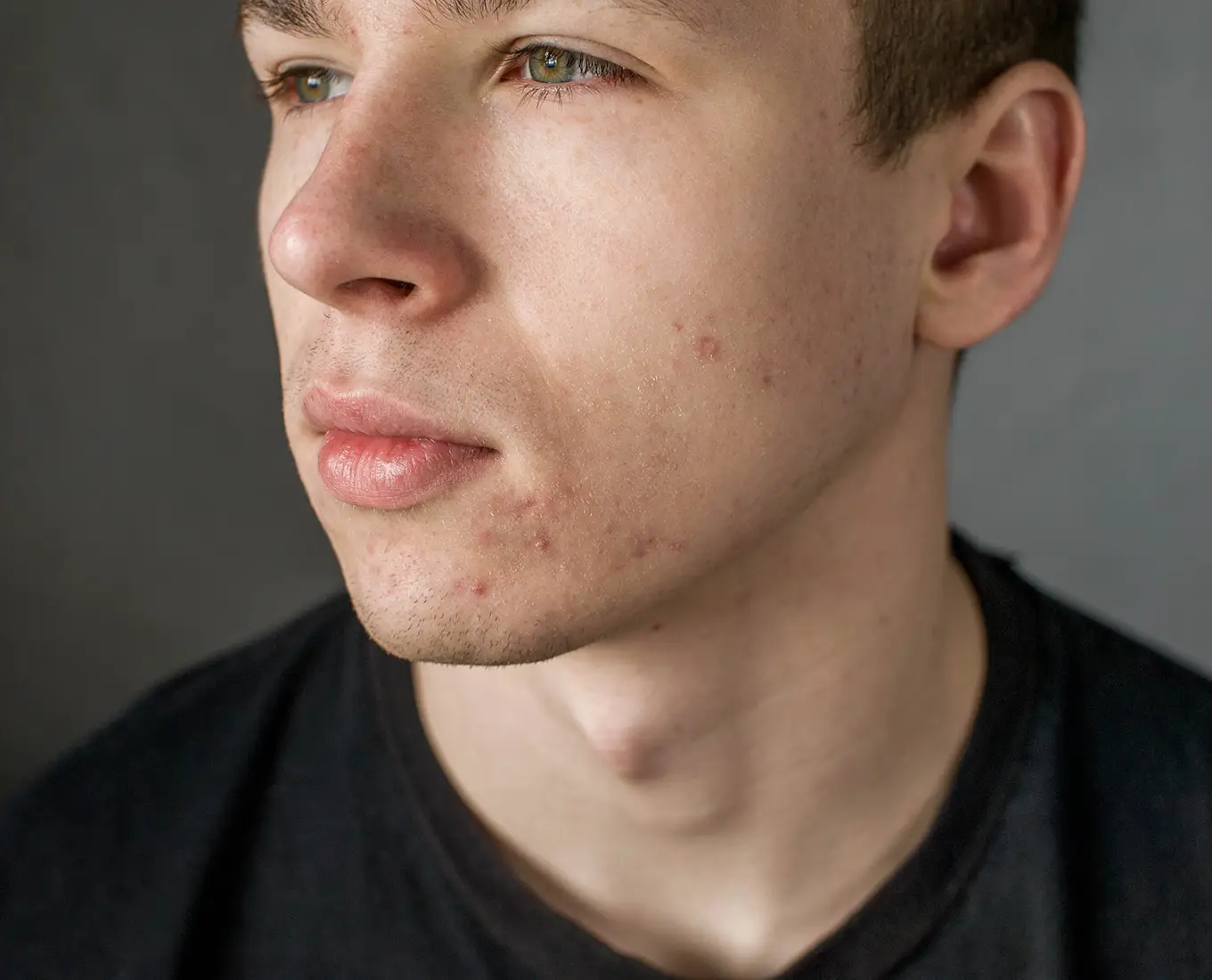
What is Acne?
The understanding of acne is changing. Inflammatory acne is now thought of as a reaction to the acne bacteria, a normal component of our skin.
Comedonal acne (blackheads) is believed to be influenced by the keratinization process of the skin. Hormones play a role, especially in adult female acne.
Simply stated, acne is a multifactorial inflammatory disorder of the pilosebaceous unit. Total clearance of all lesions is difficult, if not impossible, in adolescent skin. Dry skin in conjunction with acne is also difficult to treat, as most acne medications are drying. We aim to improve skin health and eliminate acne lesions as best we can.
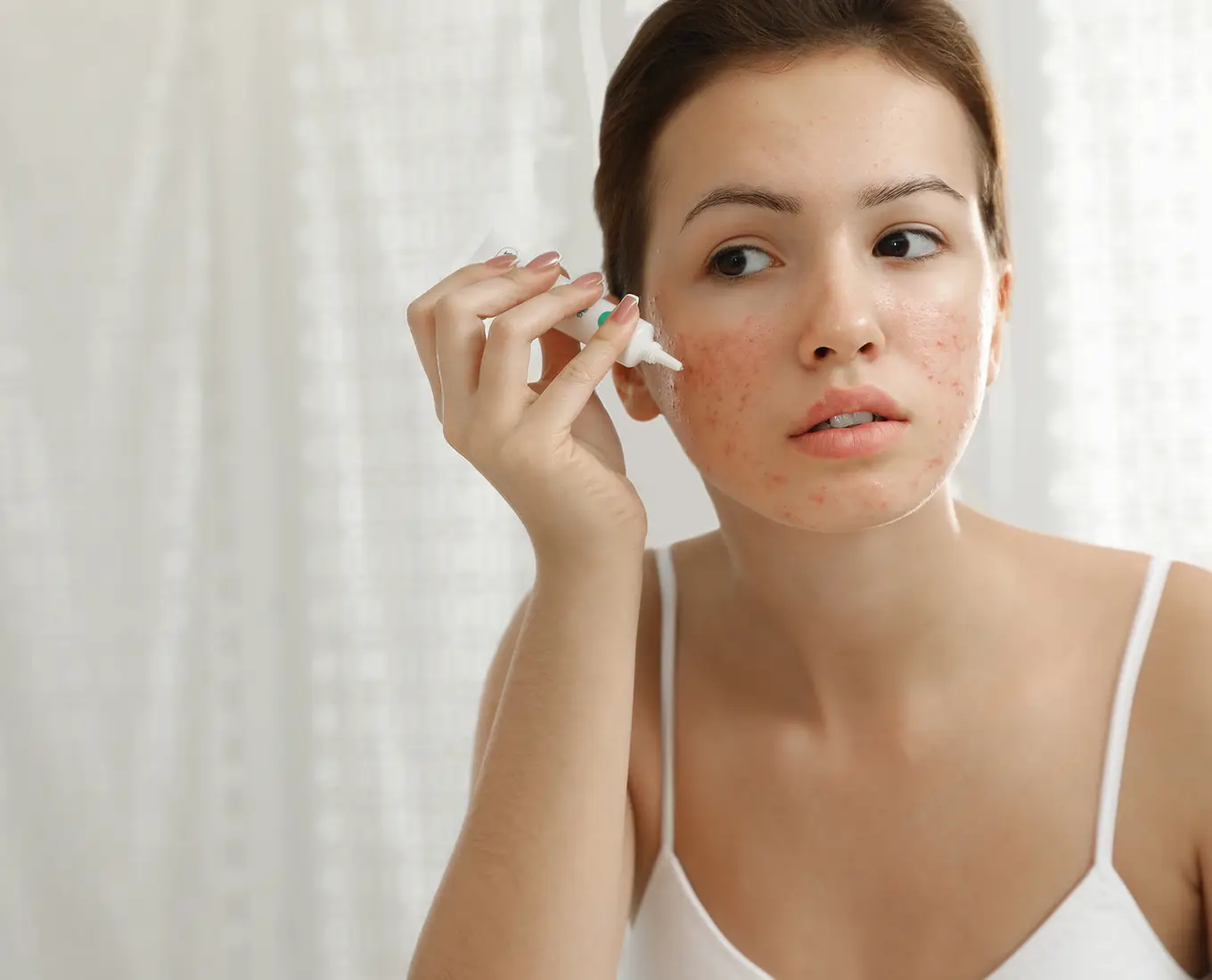
Prescription Treatments
Topicals
- Benzoyl peroxide/clindamycin combos
- Aczone (dapsone)
- Finacea
- Winlevi
- Retinoids
- Sulfa washes
Retinoids are applied all over the acne-involved areas, utilizing pea-sized amounts. We recommend you start slowly to allow your face to become accustomed to them. When starting treatment, a retinoid is applied every third night for a few weeks, then every other night, then every night if possible. You may still experience dryness, redness, and burning. This is called retinization. Use moisturizer after the retinoid to relieve symptoms.
Systemics
- Doxycycline – antibiotic with anti-inflammatory effects
- Spironolactone – anti-androgen for female acne

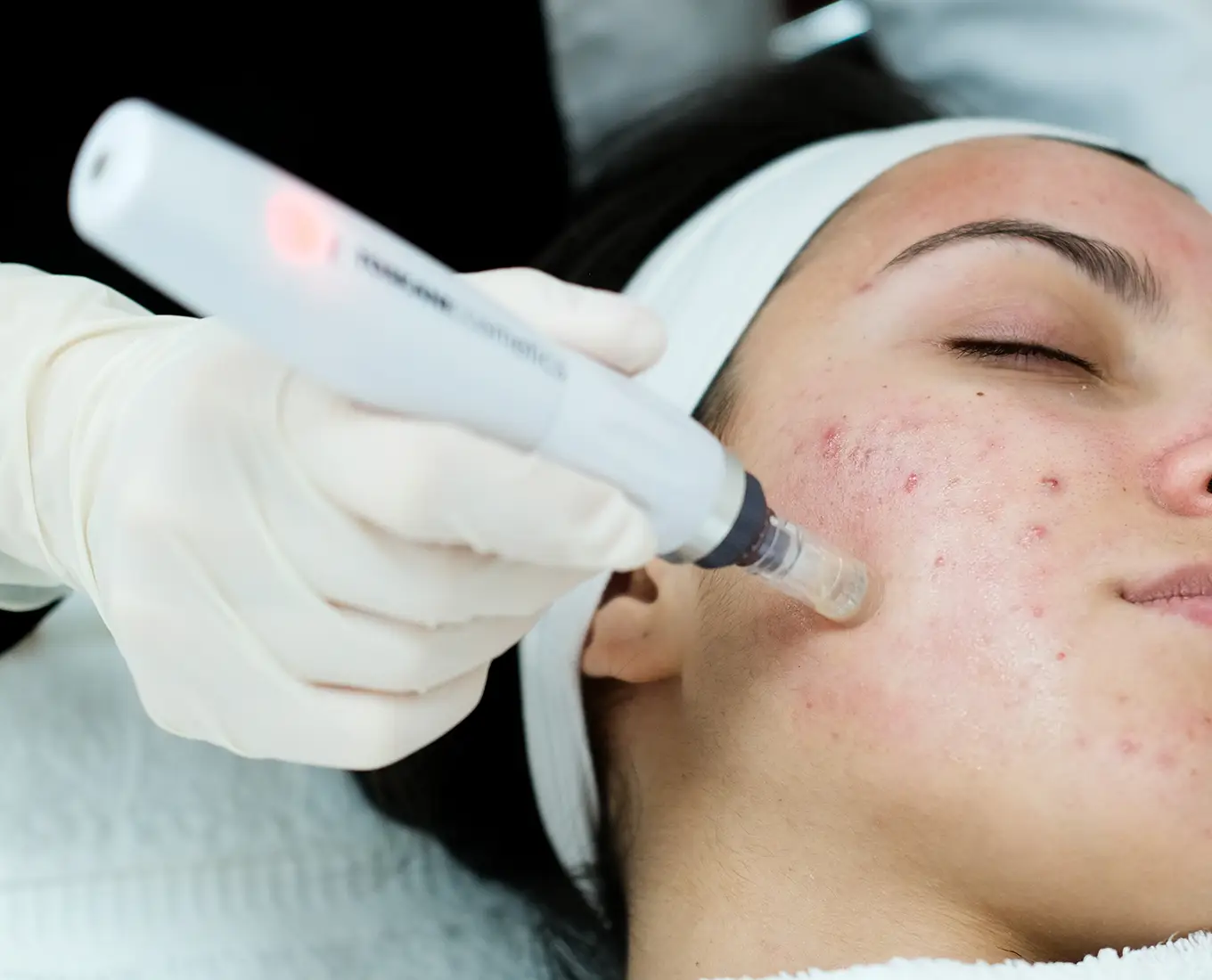
Procedure Treatments
Getting Acne Controlled
$50 – Microdermabrasion – Learn More
Varies – Chemical peel – Learn More
$50 – Clinical extractions – Learn More
Scarring & Redness
$50 – Microdermabrasion – Learn More
Varies – Chemical peel – Learn More
$75 – V-Beam Laser – Learn More
$250+ – Microneedling – Learn More
$250-475 – Secret RF – Learn More
Enlarged Pores
$250+ – Microneedling – Learn More
$250-475 – Secret RF – Learn More
$330 – Tixel 2® – Learn More
Consent
Our acne clients range throughout all ages. Anyone suffering from acne can benefit from acne procedures. In order to treat minors, we need an adult present during all procedures and a legal guardian to give consent for each procedure.
Pricing is subject to change
Procedure Treatments
There are a few things we recommend having ready before your first visit with us.
Have a list of prescription medications you’ve previously tried. Please includes names and strengths, any issues with the medications (i.e. irritation), and be able to estimate approximately how long each treatment was used.
Be realistic about your goals. Acne control is a gradual process that takes consistency and patience. The most common treatments require daily adherence. Additionally, sensitive skin can be a challenge, often prolonging the time until acne is controlled.
Make sure your skincare routine is up to par. For acne, we recommend gentle facial cleansers such as Cerave or Cetaphil to prevent dryness and irritation, especially when using prescription topical treatments. Moisturizing is great as part of a skincare routine but the wrong moisturizer can sometimes contribute to acne. Ensure that your moisturizer says “non-comedogenic” on the box, which means the product will not block pores and contribute to acne. Makeup is another common pore blocker, so make sure your product is non-comedogenic, as well. Mineral makeup is a good option. Although sun exposure can sometimes help acne, it can also contribute heavily to aging skin. Additionally, many commonly prescribed acne products have an increased risk of sun sensitivity. Therefore, we recommend daily application of a 50 SPF non-comedogenic sunscreen; physically-blocking sunscreen is preferred.
Lastly, we recommend being knowledgable about your acne. We’re going to be asking you a lot of questions and having the answers ahead of time will make your first visit go smoothly.
Common questions:
- Where on your body do you break out?
- Are your outbreaks regular or intermittent? Common triggers (i.e. sports)?
- What type of face wash, moisturizer, and makeup do you use?
- (Female) Do your outbreaks correlate with your menstrual cycles?